iPhone Duo explained: Apple’s first foldable is on sale, and reviews are mixed
Apple entered foldables with the iPhone Duo: a 7.6-inch inner display, the A20 Pro chip and a $1,999 starting price. What it offers and what reviewers say.
In 30 seconds
- The iPhone Duo is Apple’s first foldable: unveiled on September 9 and on sale since October 23.
- A 7.6-inch inner display, a 5.4-inch cover screen, the A20 Pro chip and a $1,999 starting price.
- Reviewers praise the design and battery life but flag the price and apps that don’t yet make use of the big screen.
For months, leakers and blogs called it the “iPhone Ultra” or the “iPhone Fold.” Apple went with something else: iPhone Duo, a nod to its two displays. The company unveiled it on September 9, at John Ternus’s first major event as CEO, alongside the iPhone 18 Pro and 18 Pro Max, and put it on sale on October 23 in more than 70 countries and regions.
It marks Apple’s entry into a category Samsung opened seven years ago with the original Galaxy Fold, as BGR points out. Its most direct rival is the Galaxy Z Fold 8, unveiled in late July.
What you get
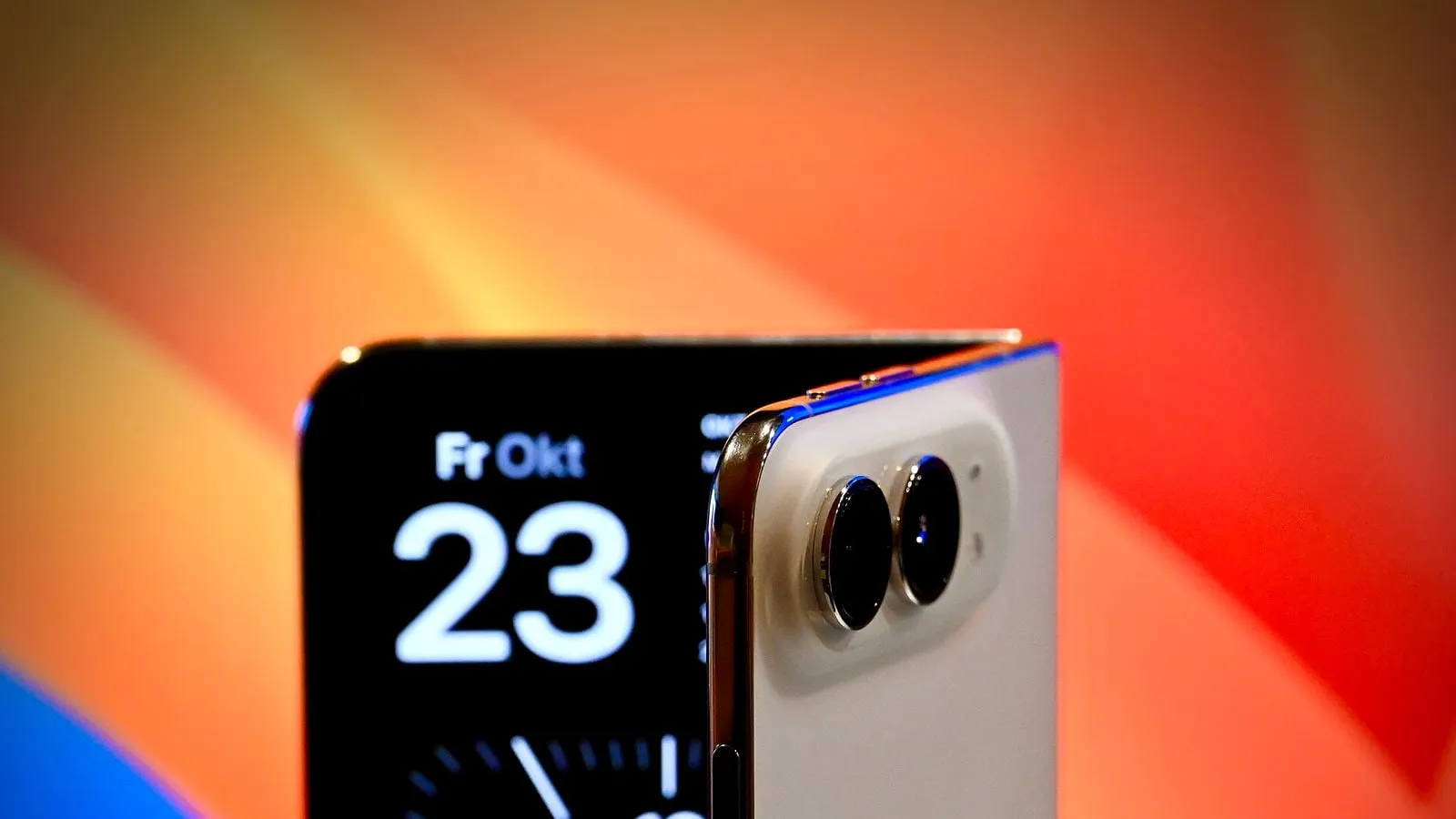
It uses a passport-style design: closed, it works like a compact iPhone with a 5.4-inch screen; open, it reveals a 7.6-inch inner display that Apple calls the largest it has ever put on an iPhone. Both screens offer ProMotion, Always On and the same aspect ratio.
Inside is the A20 Pro, built on 2-nanometer technology, with a six-core CPU that Apple says is up to 20% faster than the A19 Pro. The frame is titanium, the hinge has more than 100 components, and the phone is rated IP68.
There are notable trade-offs. There is no Face ID: you unlock it with Touch ID in the side button, open or closed. There is also no dedicated telephoto camera and no Action button, which MacRumors cites as part of why Apple steered clear of the “Ultra” name. On the back are two 48-megapixel cameras (main and ultra wide), and the FaceTime camera sits beneath the inner display.
The 2 TB model costs $3,199, according to BGR. It comes in two colors: star white and night sky.
- Sep 9Unveiled in Cupertino
John Ternus’s first major event as CEO.
- Oct 16Pre-orders open
In more than 70 countries and regions.
- Oct 21First reviews
Praise for the design; criticism of the price.
- Oct 23In stores
Launch in the first wave of markets.
- Oct 30Second wave
Another 28 countries and regions.
The AI, with caveats
Apple launched the Duo alongside iOS 27 and Apple Intelligence, but two points are worth making. First, those features aren’t exclusive to the foldable: they come to supported iPhones. Second, not everything runs on the phone: Apple pairs on-device processing with Private Cloud Compute, its cloud servers.
The new AI-powered Siri arrived as a beta, in English first, with Spanish and other languages slated for October. Apple also says it won’t initially be available in the European Union and isn’t offered to users under 13.
Where the Duo does get its own features is iOS 27: for the first time, an iPhone can show two apps side by side with Split View, and the Dock and Lock Screen controls rearrange themselves for the unfolded layout.
“the most transformational change to iPhone since the original”
What reviewers say
The early verdict from the tech press was positive, with reservations. According to Macworld’s roundup, Tom’s Guide calls it the best-designed foldable yet, and PCMag praises its hardware, performance and battery life against other foldables, though the crease can still be felt. Wired suggests it may be wise to wait for a second generation, and The Verge describes it as expensive and full of compromises, citing heat and a battery that doesn’t always last a heavy day.
The most common complaint is the same everywhere: many third-party apps haven’t adapted to the inner display yet and show black bars.